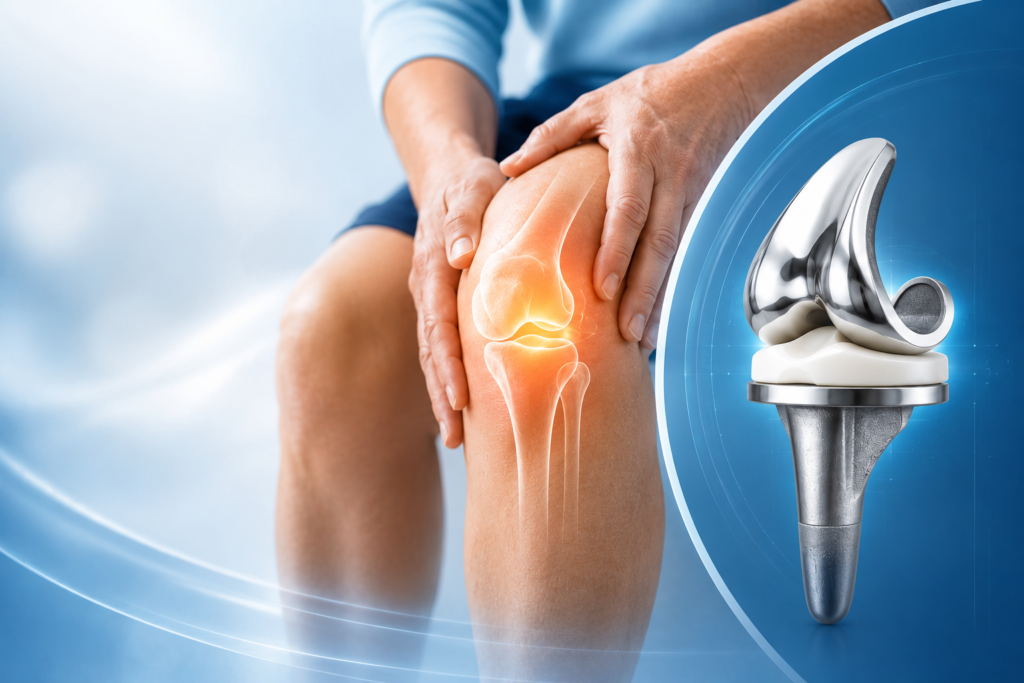
Total Knee Replacement is a highly effective surgical procedure used to relieve chronic knee pain and restore mobility in patients suffering from severe arthritis, joint degeneration, or knee injury. During the procedure, the damaged surfaces of the knee joint are replaced with advanced artificial implants designed to improve function, stability, and movement. Total knee replacement helps reduce pain, correct deformities, and enhance the overall quality of life for patients who struggle with daily activities due to knee discomfort. With modern surgical techniques and advanced rehabilitation programs, patients can experience faster recovery, improved flexibility.
Menu
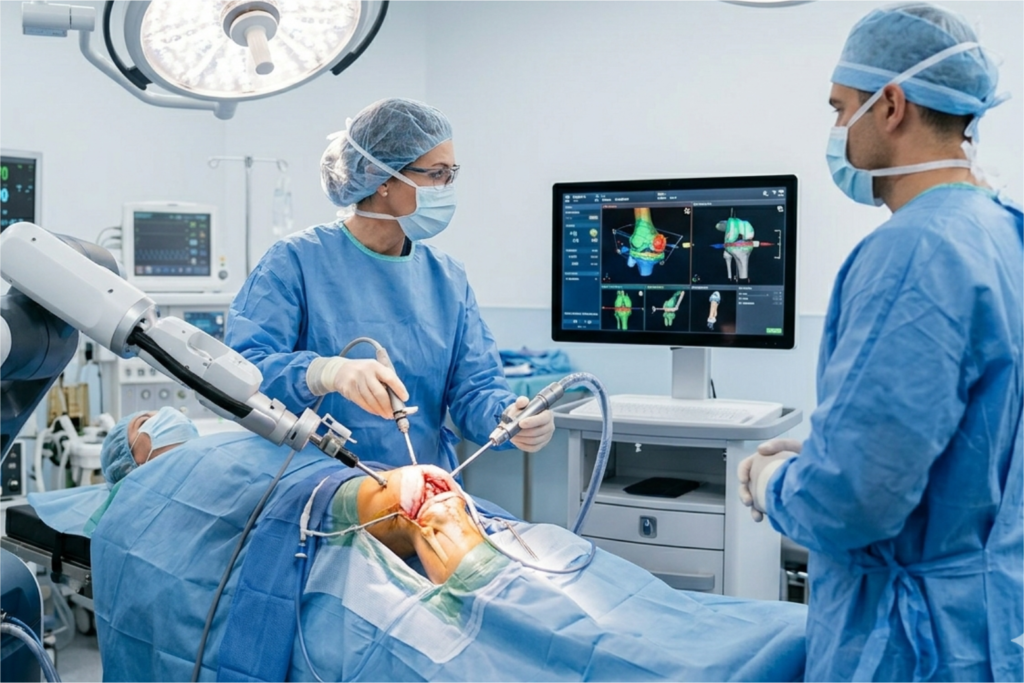
Robotic Knee Replacement Patient
Robotic Knee Replacement is an advanced surgical procedure that uses state-of-the-art robotic technology to assist orthopedic surgeons in performing highly precise knee replacement surgeries. The technology helps create a personalized surgical plan based on the patient’s anatomy, ensuring improved accuracy, better implant positioning, reduced pain, faster recovery, and enhanced mobility. With minimally invasive techniques and real-time guidance, robotic knee replacement offers patients a safer and more effective solution for chronic knee pain caused by arthritis or joint damage, helping them return to an active and pain-free lifestyle.
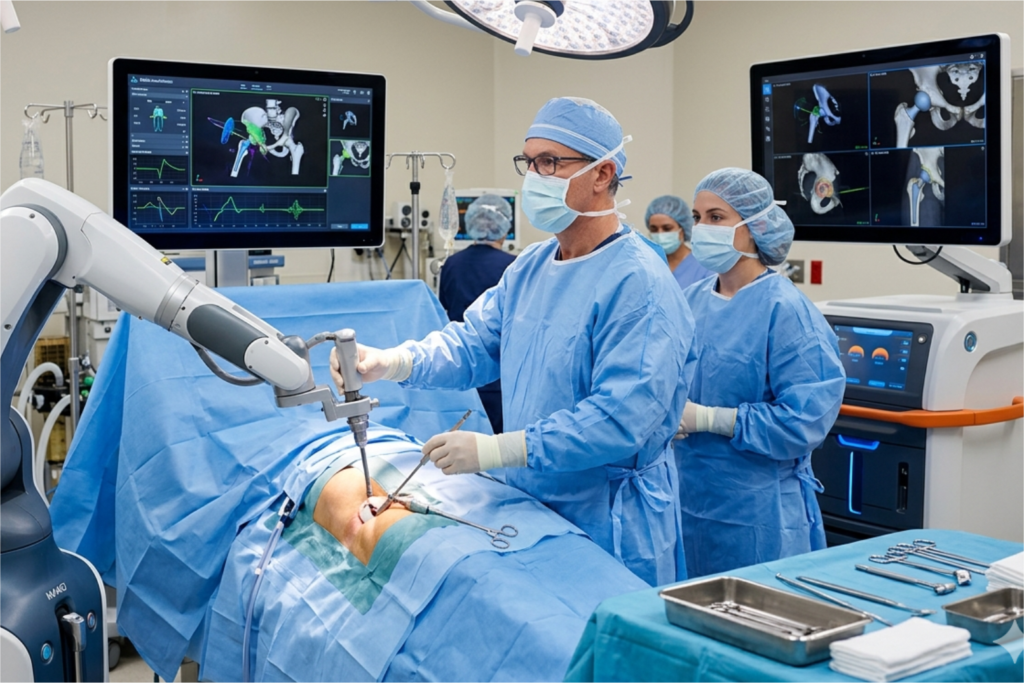
Robotic Hip Replacement
Robotic Hip Replacement is an advanced surgical procedure that combines the expertise of orthopedic surgeons with robotic-assisted technology to deliver greater precision, accuracy, and improved patient outcomes. This innovative approach allows surgeons to create a personalized surgical plan based on the patient’s anatomy, ensuring optimal implant placement and better joint alignment. Robotic-assisted hip replacement helps reduce pain, minimize tissue damage, improve mobility, and support faster recovery compared to traditional methods. Ideal for patients suffering from arthritis, hip degeneration, or chronic joint pain.
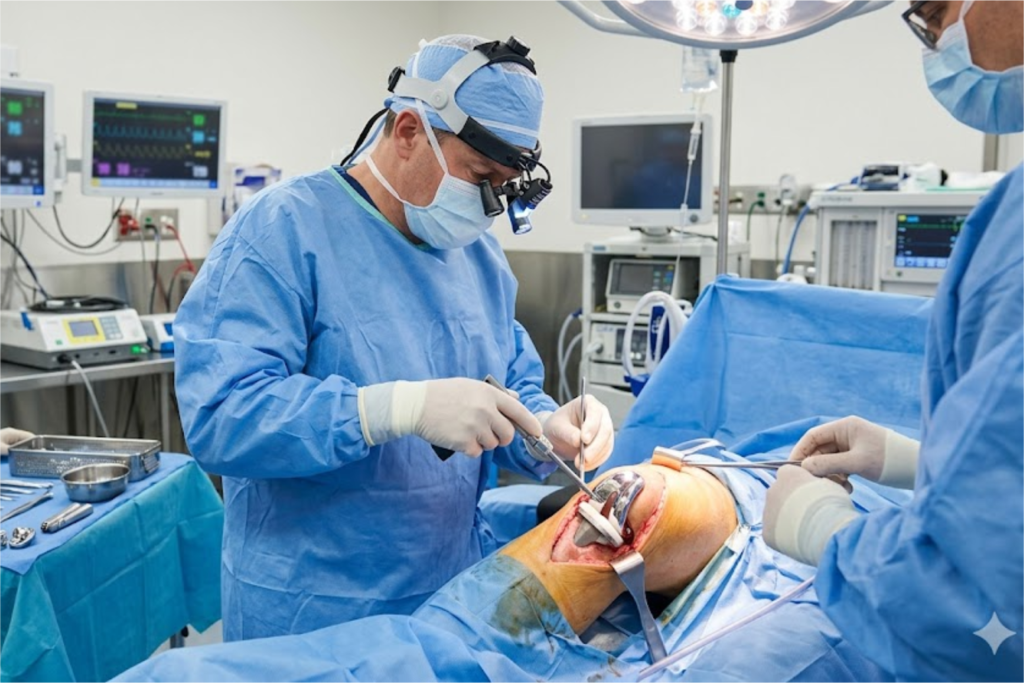
Unicondylar Knee Replacement
Unicondylar Knee Replacement, also known as Partial Knee Replacement, is a minimally invasive surgical procedure designed to replace only the damaged portion of the knee joint while preserving healthy bone, cartilage, and ligaments. This advanced treatment is ideal for patients with arthritis or joint damage limited to a single compartment of the knee. Compared to total knee replacement, unicondylar knee replacement offers smaller incisions, less pain, reduced blood loss, quicker recovery, and more natural knee movement after surgery. By maintaining the healthy parts of the knee, patients often experience improved mobility, better joint function, and a faster return to everyday activities.
Total Knee Replacement

Total Hip Replacement
Total Hip Replacement is an advanced surgical procedure designed to relieve chronic hip pain and restore mobility by replacing the damaged hip joint with durable artificial implants. Commonly recommended for patients suffering from arthritis, hip fractures, or severe joint degeneration, this procedure helps improve joint function, reduce stiffness, and enhance overall quality of life. Total hip replacement allows patients to move more comfortably, perform daily activities with ease, and regain an active lifestyle with reduced pain and improved flexibility. With modern surgical techniques and personalized rehabilitation programs, patients often experience faster recovery & long-lasting results.
Knee Replacement With Patient-Specific Jigs
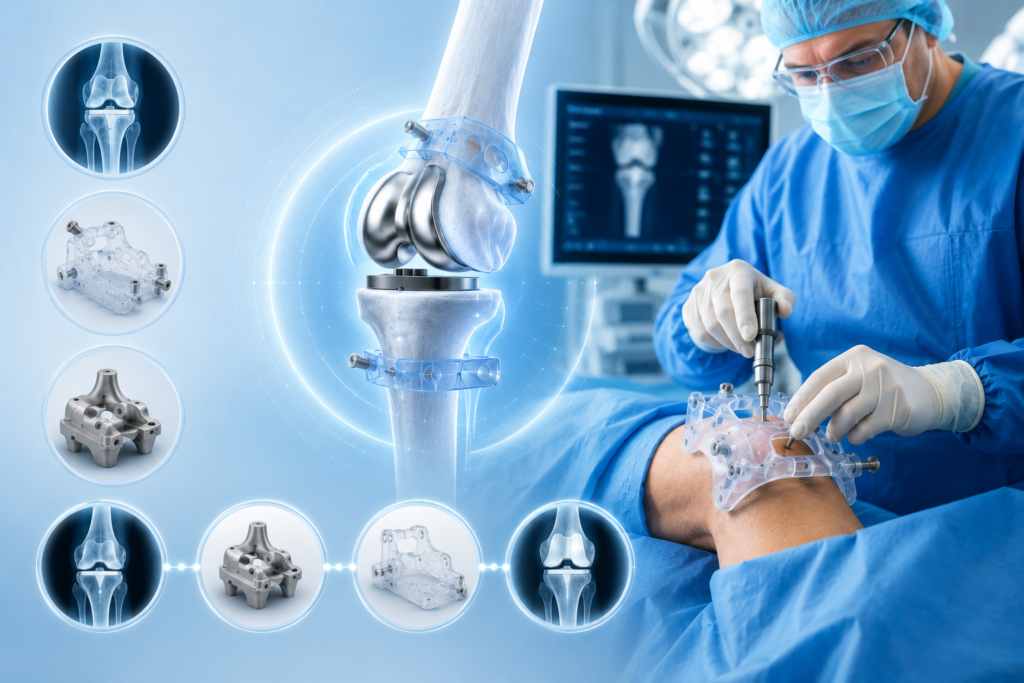
Knee Replacement with Patient-Specific Jigs is an advanced orthopedic procedure that uses customized surgical guides designed according to the patient’s unique knee anatomy. Using detailed imaging such as MRI or CT scans, these personalized jigs help surgeons achieve greater precision in implant positioning and alignment during knee replacement surgery. This technology enhances surgical accuracy, minimizes bone and tissue damage, reduces operating time, and supports better joint function after surgery. Patients often benefit from reduced pain, quicker recovery & improved mobility.

Shoulder Replacement Surgery
Shoulder Replacement Surgery is an advanced orthopedic procedure designed to relieve severe shoulder pain and restore joint function by replacing damaged parts of the shoulder with artificial implants. Commonly recommended for patients suffering from arthritis, fractures, rotator cuff injuries, or chronic joint degeneration, this surgery helps improve mobility, reduce stiffness, and enhance overall shoulder strength and movement. With modern surgical techniques and personalized rehabilitation programs, shoulder replacement surgery allows patients to regain comfort, perform daily activities more easily, and return to an active lifestyle with long-lasting pain relief.
Knee Arthroscopy
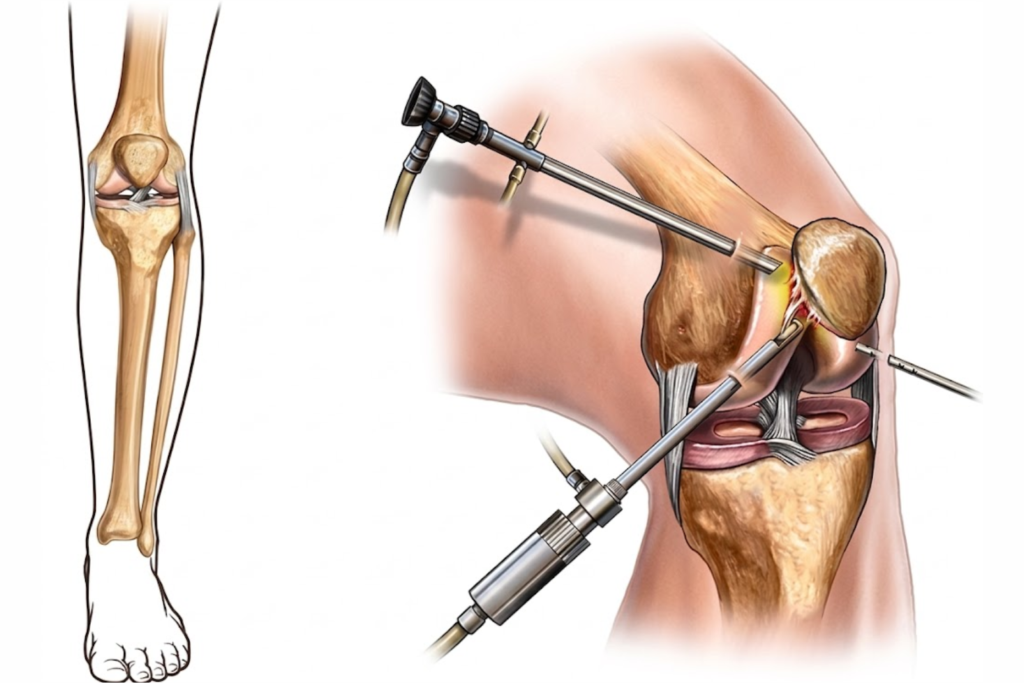
Knee Arthroscopy is a minimally invasive surgical procedure used to diagnose and treat a variety of knee joint problems through small incisions using a specialized camera called an arthroscope. This advanced technique is commonly performed to repair torn ligaments, damaged cartilage, meniscus injuries, and other knee conditions causing pain, swelling, or limited movement. Compared to traditional open surgery, knee arthroscopy offers reduced pain, smaller scars, minimal tissue damage, and faster recovery. The procedure helps restore knee stability, improve joint function, and allows patients to return to daily activities and sports with greater comfort and mobility.
Hip Arthroscopy
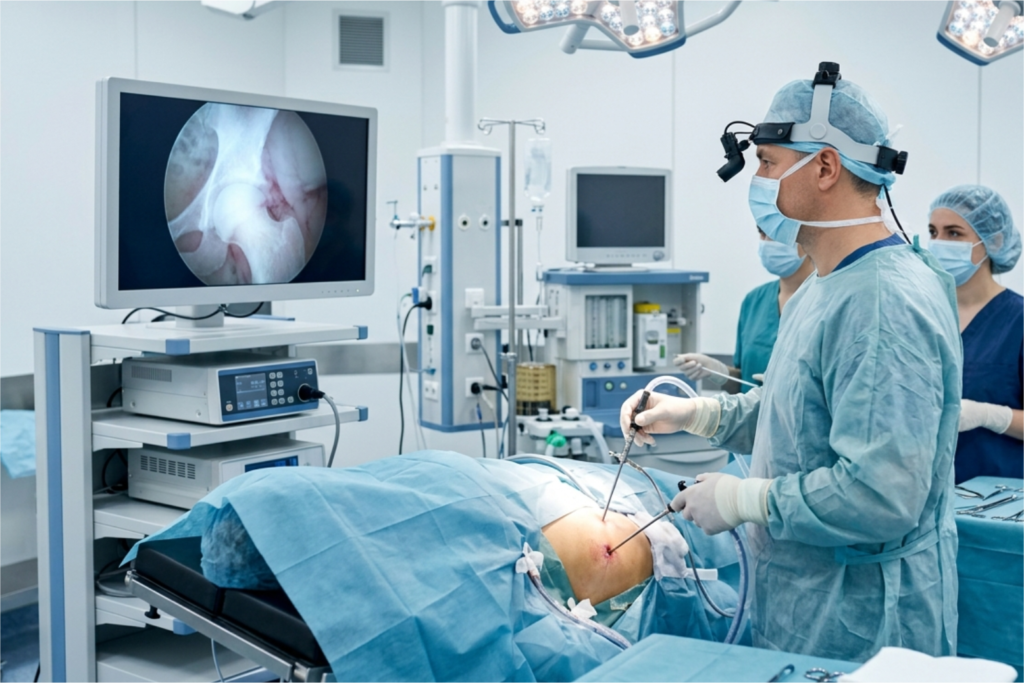
Hip Arthroscopy is a minimally invasive surgical procedure used to diagnose and treat various hip joint conditions through small incisions with the help of a specialized camera called an arthroscope. This advanced technique is commonly performed to address labral tears, hip impingement, cartilage damage, and joint inflammation that cause pain, stiffness, or reduced mobility. Compared to traditional open surgery, hip arthroscopy offers smaller scars, less tissue damage, reduced pain, and quicker recovery. The procedure helps improve hip function, restore flexibility, and allows patients to return to daily activities, sports, and an active lifestyle with enhanced comfort and mobility.
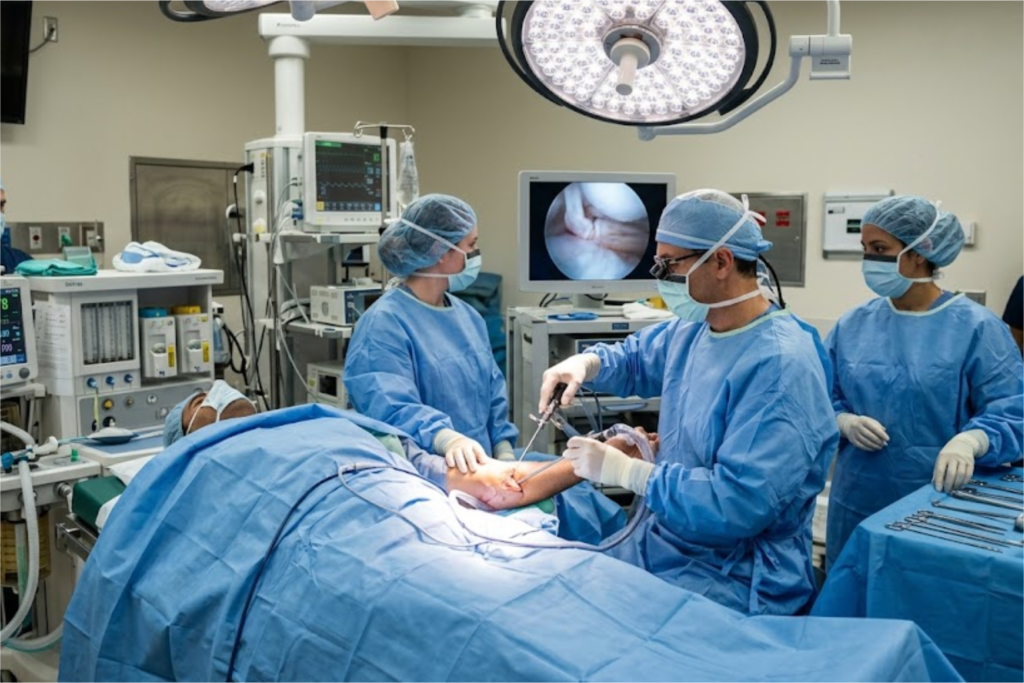
Elbow Replacement Surgery
Elbow Replacement Surgery is an advanced orthopedic procedure designed to relieve severe elbow pain and restore joint function by replacing damaged parts of the elbow with artificial implants. Commonly recommended for patients suffering from rheumatoid arthritis, severe fractures, osteoarthritis, or joint degeneration, this surgery helps improve mobility, reduce stiffness, and enhance arm strength and flexibility. With modern surgical techniques and personalized rehabilitation programs, elbow replacement surgery allows patients to perform daily activities more comfortably, regain better movement, and enjoy long-lasting pain relief with improved joint stability and function.
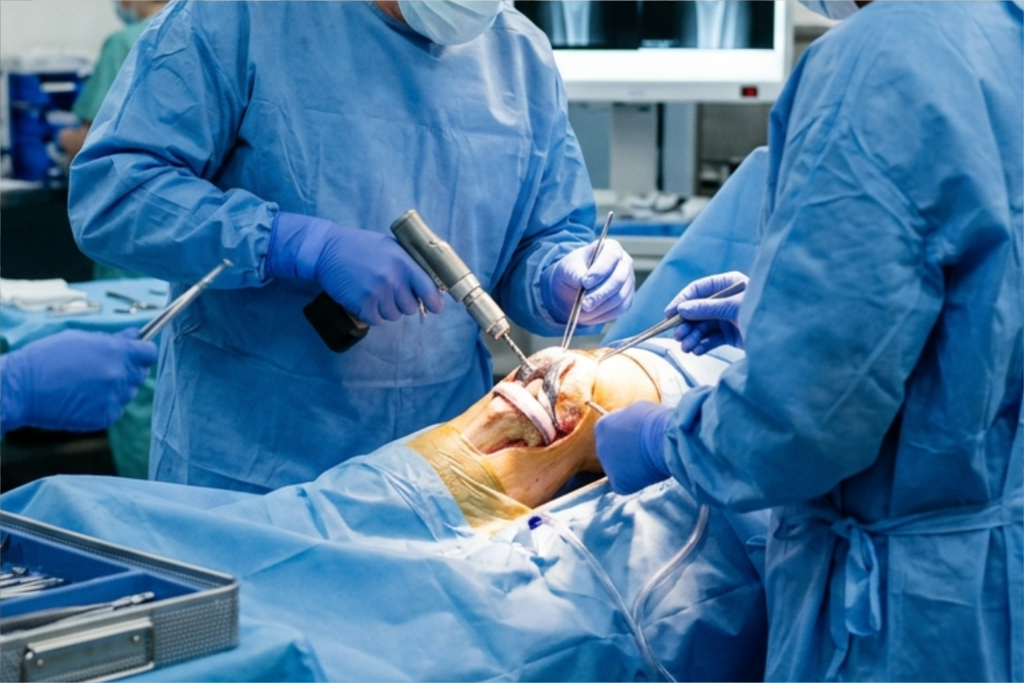
Knee Revision Surgery
Knee Revision Surgery is a specialized procedure performed to replace or repair a previously implanted knee replacement that has worn out, become loose, infected, or failed to function properly. This surgery is often more complex than a primary knee replacement and is recommended for patients experiencing persistent pain, instability, stiffness, or reduced mobility after an initial knee replacement. Using advanced techniques and specialized implants, knee revision surgery aims to restore joint alignment, improve stability, and enhance overall knee function. With proper rehabilitation, patients can achieve significant pain relief, better movement, and improved quality of life, allowing them to return to daily activities with greater comfort.
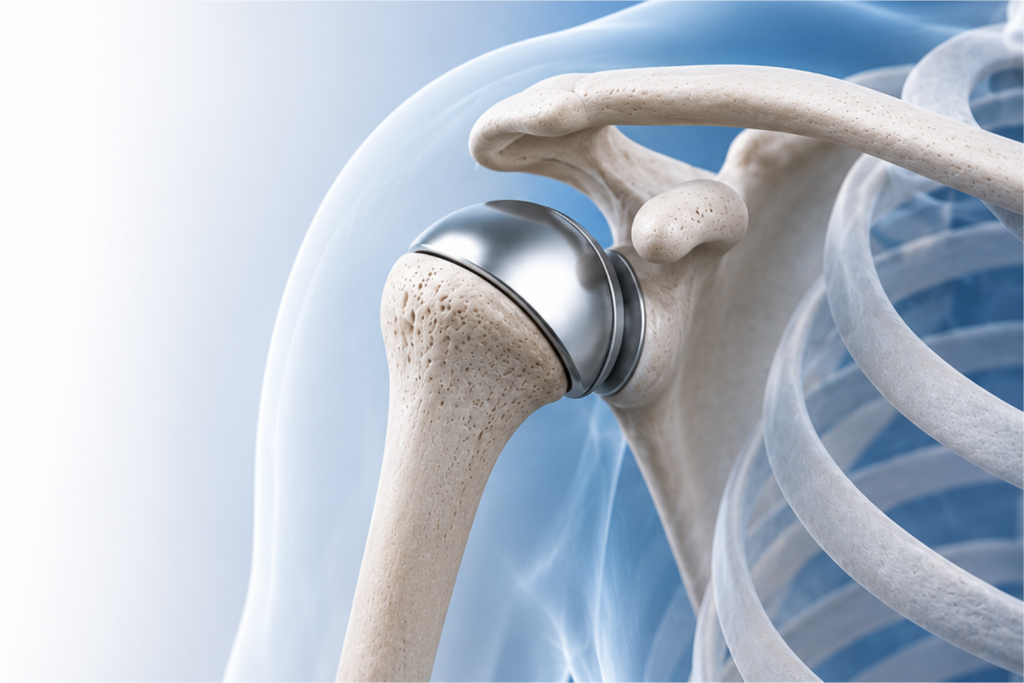
Shoulder Resurfacing Arthroplasty
Shoulder Resurfacing Arthroplasty is a bone-preserving surgical procedure used to treat severe shoulder joint pain and damage by replacing only the worn surface of the humeral head with a smooth metal cap, rather than replacing the entire joint. It is commonly recommended for patients with arthritis, avascular necrosis, or early-stage joint degeneration who still have relatively healthy bone structure. This technique helps maintain more natural bone anatomy, reduces surgical invasiveness, and often allows for quicker recovery compared to total shoulder replacement. Shoulder resurfacing arthroplasty improves joint movement, reduces pain and stiffness.